
For high school students navigating the maze of college admissions, the ACT stands out as a compelling yet often overlooked option. While the SAT has long dominated the spotlight, particularly in regions like New England, the ACT offers distinct advantages that make it a great test for students to consider. It’s a shame that New England high schools overwhelmingly push the SAT, rarely encouraging students to explore the ACT as a viable alternative. With favorable statistics, a straightforward design, and easier preparation, the ACT deserves a closer look from students and educators alike.
The ACT’s Edge: Favorable Statistics Speak Volumes
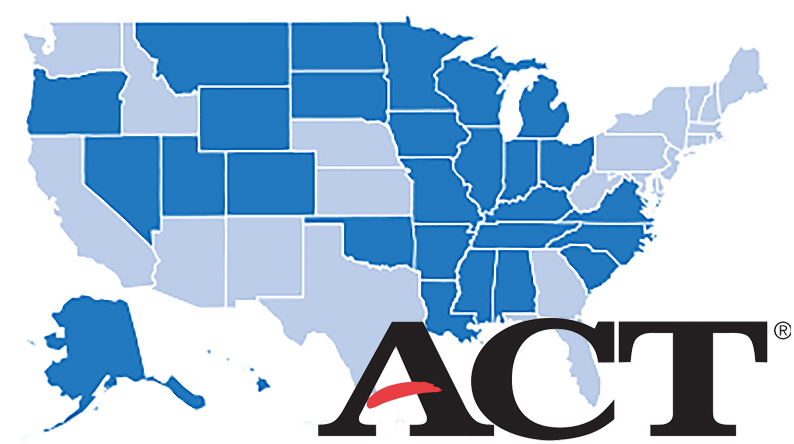
The ACT has quietly built a reputation as a student-friendly test, backed by data that highlights its accessibility and effectiveness. In 2023, approximately 1.4 million students took the ACT, compared to 1.9 million for the SAT, according to the College Board and ACT Inc. reports. While the SAT edges out in total numbers, the ACT’s participation rate in certain states—particularly in the Midwest and South—often exceeds 90%, reflecting its widespread acceptance and appeal. For instance, in states like Kentucky and Tennessee, where the ACT is mandated for all high school juniors, average scores hover around 19-20 (out of 36), demonstrating that even broad testing pools yield solid results.
More impressively, the ACT’s scoring system offers a forgiving curve. A perfect score of 36 allows for a handful of missed questions—typically 7-8 across its 215 total questions—whereas the SAT’s perfect 1600 permits only 2-3 errors. This flexibility, noted by college prep experts like Kaplan, means higher scores are often more attainable on the ACT. In a 2024 survey by Test Innovators, 61% of students who took both tests reported feeling their ACT score better reflected their academic abilities, compared to 52% for the SAT. These statistics underscore the ACT’s potential to level the playing field, especially for students who might not thrive under the SAT’s stricter margins.
A Shameful Oversight in New England
In New England, however, the ACT struggles to gain traction. High schools in states like Massachusetts, Connecticut, and New Hampshire have historically aligned with the SAT, a bias rooted in the test’s origins with the College Board, a Northeast-based organization. For decades, the SAT was the default choice for Ivy League-bound students, cementing its cultural dominance in the region. A 2023 analysis by Compass Education Group found that only 15% of New England test-takers opted for the ACT, compared to 45% nationwide. This imbalance is a disservice to students, as it limits their exposure to a test that might better suit their strengths.
The lack of encouragement for the ACT in New England is particularly puzzling given its alignment with high school curricula. Unlike the SAT, which emphasizes critical reasoning and has shifted to an adaptive digital format since March 2024, the ACT is a curriculum-based test covering English, Math, Reading, and Science—subjects students already encounter daily. This familiarity reduces the need for specialized test-taking strategies, making it a shame that New England schools don’t promote it alongside the SAT. Students deserve the chance to choose the test that plays to their academic comfort zone, rather than being funneled into a one-size-fits-all SAT pipeline.
Why the ACT Shines: Design and Preparation Advantages
What makes the ACT particularly great is its straightforward structure. It consists of four mandatory sections—English (75 questions, 45 minutes), Math (60 questions, 60 minutes), Reading (40 questions, 35 minutes), and Science (40 questions, 35 minutes)—plus an optional Writing section (40 minutes). This breaks the test into manageable chunks, totaling 2 hours and 55 minutes without the essay, or 3 hours and 35 minutes with it. By contrast, the digital SAT’s two longer sections (Reading/Writing and Math) clock in at 2 hours and 14 minutes but adapt in difficulty, introducing unpredictability that can rattle some students.
The ACT’s predictability is a boon for preparation. Its questions are generally more direct, testing knowledge rather than puzzle-like reasoning. For example, the Math section covers a broad range of high school topics—algebra, geometry, and trigonometry—but avoids the SAT’s occasional “fill-in-the-blank” complexity. The Science section, often misunderstood as requiring deep scientific knowledge, primarily assesses data interpretation and reasoning skills, skills honed in standard science classes. A 2024 Princeton Review study found that 58% of students rated ACT questions as “easier to understand” than SAT ones, citing fewer trick questions and less convoluted phrasing.
Preparation for the ACT is also more streamlined. Because it mirrors high school coursework, students can lean on their existing studies rather than mastering abstract test strategies. Resources like the official ACT prep guide, Khan Academy’s free ACT practice, and even classroom notes suffice for many. Tutors from Applerouth Education noted in 2023 that students prepping for the ACT required 20-30% fewer hours to achieve score gains compared to the SAT, thanks to its consistent format and content. The ACT’s “My Answer Key” service, available for three test dates annually, further enhances prep by providing students with their exact questions and answers post-test—a transparency the SAT lacks outside select paper-based eras.
A Test for All Strengths
The ACT’s inclusivity is another reason it’s a great choice. Its Science section appeals to STEM-inclined students, while the English and Reading sections reward strong language skills without the SAT’s heavy vocabulary focus. For students who excel in quick problem-solving or prefer a faster pace (about 49 seconds per question versus the SAT’s 1 minute 35 seconds), the ACT aligns beautifully. Even the optional Writing section, required by some colleges, offers a clear prompt analyzing multiple perspectives—less abstract than the SAT’s former essay (discontinued in 2021).
In contrast, the digital SAT’s adaptive nature can penalize early mistakes, routing students to an easier second module with a lower score ceiling (e.g., 620-630 versus 800). The ACT’s linear format ensures every student faces the same questions, offering a fair shot at the full 36-point scale. This consistency, paired with its curriculum focus, makes it a better fit for students who thrive on clarity and content mastery over adaptive guesswork.
Breaking the SAT Monopoly in New England
It’s high time New England high schools rethink their SAT-centric approach. The ACT isn’t just an alternative—it’s a superior option for many. Counselors and educators should present it as an equal contender, highlighting its favorable stats: higher score attainability, broader content coverage, and prep ease. A 2024 CollegeVine survey revealed that 67% of students who took both tests wished they’d focused on the ACT sooner, often after discovering it better showcased their abilities.
The ACT empowers students to play to their strengths without the SAT’s regional baggage. It’s a shame that New England’s SAT obsession overshadows this gem, but students can break the mold. By considering the ACT, they might just find a test that’s not only great but transformative for their college journey.
Discover more from South Shore College Consulting & Tutoring
Subscribe to get the latest posts sent to your email.
