

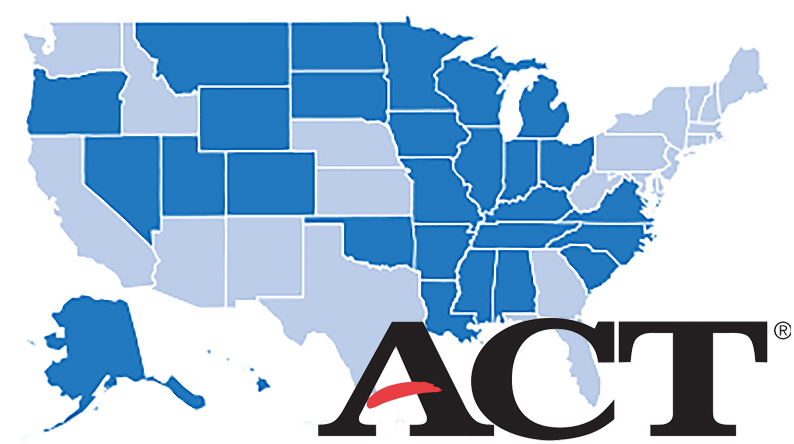
In 2025, the ACT is undergoing a significant transformation, introducing a revamped format that aims to enhance the testing experience for students while maintaining its role as a reliable measure of college readiness. The enhanced ACT promises greater flexibility, reduced test fatigue, and a more equitable testing experience compared to its competitor, the SAT.
Key Changes to the ACT in 2025
The ACT is evolving to better meet the needs of today’s students, incorporating feedback from educators, students, and testing experts. The updates, which apply to both the online (starting April 2025) and paper (starting September 2025) formats, focus on making the test shorter, more flexible, and less stressful. Below are the major changes:
1. Shorter Test Duration and Fewer Questions
The enhanced ACT is significantly shorter, reducing the core test (English, Math, and Reading sections) from approximately 2 hours and 55 minutes to about 2 hours. The total number of questions has been cut by 44, from 215 to 171, resulting in a less grueling experience. This reduction aims to minimize test fatigue, allowing students to maintain focus and perform at their best. The optional Science section, if taken, adds an additional 40 minutes and 40 questions, bringing the total test time to roughly 2 hours and 40 minutes.
- English Section: Reduced from 75 questions in 45 minutes to 50 questions in 35 minutes, giving students 42 seconds per question (up from 32 seconds).
- Math Section: Reduced from 60 questions in 60 minutes to 45 questions in 50 minutes, with each question now having four answer choices instead of five, and students receiving over 60 seconds per question.
- Reading Section: Reduced from 40 questions in 35 minutes to 36 questions in 40 minutes, providing 67 seconds per question, a 27% increase in time per question.
Shorter reading passages in the English and Reading sections further enhance accessibility, making the content more manageable and less overwhelming.
2. Optional Science Section
One of the most significant changes is making the Science section optional, similar to the Writing section. Starting in April 2025 for online tests and September 2025 for all formats, the composite score will be calculated based on the average of the English, Math, and Reading sections (the “Core” sections), scored on the familiar 1-36 scale. Students who opt for the Science section will receive a separate Science score and a STEM score, which can be particularly valuable for those applying to STEM programs. This flexibility allows students to tailor the test to their strengths and college application goals, reducing pressure for those less confident in science.
3. Choice of Test Format: Paper or Digital
Unlike the SAT, which is now fully digital, the ACT offers students the choice between paper and digital formats, with both versions featuring identical content and structure. The digital ACT, available at select test centers starting in April 2025, includes accessibility tools such as customizable color contrast, magnification, line readers, and a digital calculator (potentially similar to the Desmos calculator used in the SAT). These tools enhance the testing experience for students with accommodations or those who prefer digital interfaces. The option to choose a format that suits their comfort level ensures students can perform optimally.
4. Non-Adaptive Testing
Unlike the digital SAT, which uses adaptive testing (where question difficulty adjusts based on a student’s performance), the ACT remains a linear test. All test-takers, whether on paper or digital, encounter the same questions in the same order, ensuring consistency and fairness across administrations.
5. Revised Scoring and Superscoring
The composite score, now based on English, Math, and Reading, maintains the 1-36 scale, ensuring continuity with previous ACT scores. Students who take the Science section will have it reported separately, but it will not affect the composite score unless colleges specify otherwise. Superscoring, which averages a student’s best section scores across multiple test dates, will continue, though colleges may vary in how they handle scores from science-included versus science-optional formats. The ACT’s scoring consistency and transparency make it easier for students to understand and report their results.
6. Implementation Timeline
- April 2025: The enhanced ACT debuts for online National (Saturday) testing, with the Science section optional.
- June and July 2025: Online testers continue with the new format, while paper testers use the older format (Science required).
- September 2025: All National (Saturday) tests, both paper and digital, adopt the enhanced format with an optional Science section.
- Spring 2026: State and District (School Day) testing transitions to the new format.
7. Additional Enhancements
- Embedded Field Testing: Experimental questions are now integrated throughout the test rather than in a separate “5th test” section, ensuring they do not impact scores but help refine future exams.
- Streamlined Accommodations: The ACT has simplified the accommodations request process, allowing students to apply through their school counselors after registration, enhancing accessibility.
- Cost Reduction: The ACT aims to lower the cost of the standard test required for a college-reportable composite score, making it more affordable for students.
Improvements to the Testing Experience
The 2025 ACT enhancements are designed to reduce stress, improve accessibility, and align with modern educational needs. Key improvements include:
- Reduced Test Fatigue: The shorter test length (2 hours for the core sections) and fewer questions (171 total) make the ACT less physically and mentally taxing, allowing students to stay focused and perform better.
- More Time Per Question: With an average of 22% more time per question, students can approach problems more thoughtfully, reducing the pressure of time constraints and potentially improving accuracy.
- Optional Science Section: By making Science optional, the ACT caters to students with diverse academic strengths, allowing those less inclined toward science to focus on core subjects while still offering STEM-focused students a chance to shine.
- Flexible Format Options: The choice between paper and digital formats accommodates different learning styles and preferences, with digital tools enhancing accessibility for students with accommodations.
- Enhanced Accessibility: Digital tools like magnification, line readers, and customizable contrast, along with streamlined accommodations processes, make the test more inclusive.
- Cost Efficiency: Lowering the cost of the core test ensures broader access, addressing financial barriers that may prevent some students from testing.
These changes reflect the ACT’s commitment to continuous improvement, aligning with industry best practices and responding to competition from the SAT, which has already transitioned to a digital, adaptive format.
Why the ACT Is Fairer Than the SAT
The enhanced ACT stands out as a fairer and more equitable exam compared to the SAT, particularly due to its non-adaptive nature and student-centered design. Here’s why:
1. Non-Adaptive Testing Ensures Consistency
The digital SAT, launched in March 2024, uses adaptive testing, where a student’s performance on the first module of each section (Reading and Writing, Math) determines the difficulty of the second module. While this approach shortens the test, it introduces variability that can disadvantage some students. For example, a student who struggles early in a section may receive easier questions, potentially capping their score potential, while those who perform well face harder questions, which may not accurately reflect their overall ability if they have an off moment.
In contrast, the ACT’s linear format ensures all students face the same questions, regardless of performance. This consistency eliminates the risk of algorithmic bias and provides a standardized measure of ability, making the test fairer across diverse student populations. The ACT’s approach aligns with the principle that standardized tests should evaluate all students on equal footing, without adjusting difficulty based on real-time performance.
2. Flexibility in Test Format
The SAT’s mandatory digital format may disadvantage students who are less comfortable with technology or lack access to reliable devices for practice. The ACT’s dual-format option (paper or digital) allows students to choose the medium that best suits their comfort and preparation, leveling the playing field for those in rural areas or with limited tech access. Additionally, the ACT’s digital version is identical to the paper version, ensuring no content disparities between formats.
3. Optional Science Section Reduces Barriers
The SAT tests only Reading, Writing, and Math, which may not fully capture the strengths of students interested in STEM fields. The ACT’s optional Science section allows students to showcase their scientific reasoning skills, which can be a significant advantage for STEM applicants. Conversely, students who find science challenging can opt out, focusing on their stronger subjects without penalizing their composite score. This flexibility reduces unnecessary barriers and makes the ACT more inclusive.
4. Addressing Socioeconomic Disparities
Standardized tests have long been criticized for favoring students with access to expensive test prep resources. The ACT’s shorter format and increased time per question reduce the emphasis on speed, which often benefits students with extensive coaching. By focusing on understanding and accuracy, the enhanced ACT levels the playing field for students who may not have access to costly prep programs. Additionally, the ACT’s commitment to lowering test costs directly addresses financial barriers, unlike the SAT, which has not announced similar cost reductions.
5. Transparent Scoring
The ACT’s scoring system remains straightforward, with a 1-36 scale for each section and the composite score based on core sections. The SAT’s adaptive scoring, while still on a 1600-point scale, introduces complexity in how scores are calculated based on question difficulty. The ACT’s transparency ensures students and colleges can easily interpret results, promoting fairness in admissions decisions.
Why Students May Choose the ACT Over the SAT
For students weighing their options, the enhanced ACT offers several compelling reasons to choose it over the SAT:
1. Tailored Testing Experience
The ACT’s flexibility—optional Science section, choice of paper or digital format, and customizable digital tools—allows students to personalize their testing experience to their strengths and preferences. This adaptability is particularly appealing for students who want to highlight specific skills or feel more comfortable in a particular format.
2. Reduced Stress and Fatigue
With a core test duration of 2 hours (compared to the SAT’s 2 hours and 14 minutes), the ACT is slightly shorter, and its 44 fewer questions make it less mentally taxing. The increased time per question further reduces the pressure to rush, creating a more manageable experience that can lead to better performance.
3. Fairness Through Consistency
The ACT’s non-adaptive format ensures all students are evaluated on the same questions, providing a fairer assessment of ability. This contrasts with the SAT’s adaptive model, which may inadvertently penalize students for early mistakes or limit their score potential. For students seeking an equitable testing experience, the ACT is the clear choice.
4. STEM Advantage
For students pursuing STEM majors, the optional Science section offers a unique opportunity to demonstrate scientific reasoning skills, which the SAT does not assess. Many colleges, especially those with strong STEM programs, value the ACT Science score, making it a strategic choice for STEM-focused applicants.
5. Accessibility and Affordability
The ACT’s dual-format option, digital tools, and streamlined accommodations process make it more accessible to diverse learners. The planned cost reduction further enhances its appeal, particularly for low-income students who may find the SAT’s fees and mandatory digital format prohibitive.
6. Familiar Preparation Resources
Since the ACT’s content and question styles remain largely unchanged, students can continue using existing prep materials, supplemented by new practice tests expected in early 2025. This continuity reduces the learning curve compared to the SAT, which requires adapting to a new adaptive format and digital tools like the Desmos calculator.
7. Competitive Edge in Admissions
With over 80% of U.S. colleges remaining test-optional for fall 2025, a strong ACT score can still set applicants apart, especially at selective schools reinstating testing requirements (e.g., Dartmouth, MIT). The ACT’s flexibility and fairness make it an attractive option for students aiming to strengthen their applications.
While the enhanced ACT offers numerous advantages, students should consider the following when deciding between the ACT and SAT:
- Take Practice Tests: Both the ACT and SAT offer free practice tests. Students should take diagnostic tests for both to determine which aligns better with their strengths. The ACT’s linear format may suit students who prefer consistency, while the SAT’s adaptive format may appeal to those comfortable with technology-driven variability.
- Research College Policies: Some colleges may require or recommend the ACT Science section, particularly for STEM programs. Students should check admissions requirements for their target schools to decide whether to take the Science section.
- Prepare Early: With the ACT’s changes rolling out in April 2025, students should familiarize themselves with the new format using updated practice tests (expected in early 2025). For those testing before September 2025, the paper-based ACT will retain the older format, so preparation should align with the test date and format.
- Consider Timing: Students in the Class of 2026 should aim to complete testing by July 2025 if they prefer the classic ACT format. Those testing later will need to prepare for the enhanced format, which may require slight adjustments in pacing and strategy.
The enhanced ACT, which launched online in April and will launch on paper in September, represents a significant step forward in standardized testing. With a shorter test, fewer questions, an optional Science section, and flexible format options, the ACT is designed to reduce stress, enhance accessibility, and align with modern student needs. Its non-adaptive format ensures fairness by providing all students with the same questions, avoiding the potential biases of the SAT’s adaptive model. For students seeking a fair, flexible, and student-centered testing experience, the ACT is a compelling choice over the SAT, offering opportunities to showcase strengths, reduce financial barriers, and stand out in college admissions. By preparing strategically and leveraging the ACT’s improvements, students can approach test day with confidence and achieve scores that reflect their true potential.
Sources:
- Kaplan Test Prep, 2025 ACT Updates
- Compass Education Group, Changes to the ACT
- ACT.org, ACT Test Enhancements & Changes
- PrepMaven, The ACT is Changing
- Collegewise, New Enhanced ACT Exam
- USA Today, Big changes are coming to the SAT
- SayHelloCollege, Big Changes to the ACT Exam
- Score At The Top, SAT vs. New ACT
- Mindfish Test Prep, Changes are Coming to the ACT
- U.S. News, The ACT Is Changing
- UWorld College Readiness, ACT® Changes in 2025-26
- Testbook, SAT Changes
- ACTStudent, Enhanced ACT Announcement
Discover more from South Shore College Consulting & Tutoring
Subscribe to get the latest posts sent to your email.
