
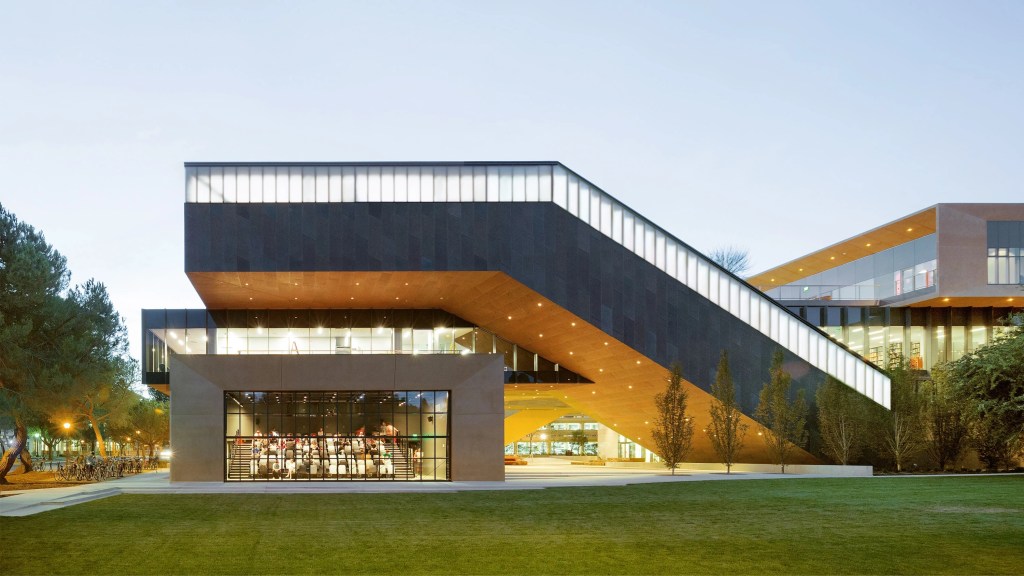
At South Shore College Consulting & Tutoring, we understand that a college’s campus is more than just a place to study—it’s a dynamic environment that shapes a student’s academic, social, and personal growth. Modern college campuses integrate cutting-edge technology, sustainable design, and innovative facilities to create spaces that inspire learning, foster collaboration, and prepare students for a rapidly evolving world. For students seeking institutions that blend academic excellence with forward-thinking infrastructure, we’ve compiled a list of the 10 most modern college campuses in the United States for 2025. These campuses, selected based on technological advancements, sustainable architecture, state-of-the-art facilities, and student-centric design, offer environments that enhance the college experience and align with the needs of today’s tech-savvy, environmentally conscious students.
Criteria for Selection
Our list prioritizes campuses that exemplify modernity through:
- Technological Integration: Advanced labs, smart classrooms, and campus-wide connectivity.
- Sustainable Design: Eco-friendly buildings, renewable energy, and low carbon footprints.
- Innovative Facilities: Cutting-edge research centers, maker spaces, and modern residence halls.
- Student-Centric Spaces: Collaborative areas, wellness facilities, and vibrant social hubs.
- Recent Investments: New or renovated structures completed within the last decade.
Drawing on data from U.S. News & World Report, College Cliffs, AdmissionSight, and student feedback on platforms like Niche and X, we’ve ensured these campuses reflect the latest trends in higher education infrastructure. This list avoids campuses valued solely for historical beauty (e.g., Princeton’s Gothic architecture) and focuses on those pushing the boundaries of modern design and functionality.
The 10 Most Modern College Campuses
1. Massachusetts Institute of Technology (MIT) – Cambridge, MA
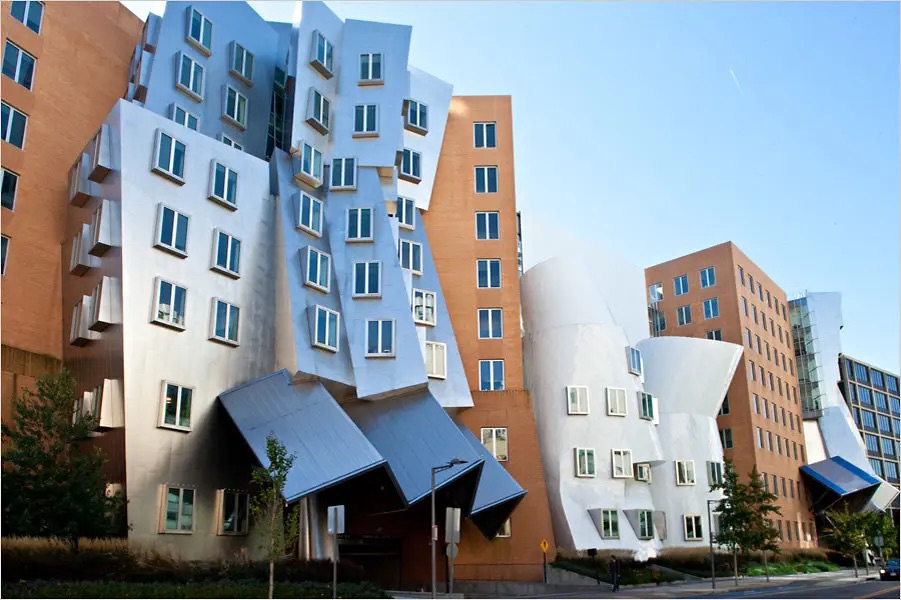
- Why It’s Modern: MIT, ranked #2 in National Universities (U.S. News, 2025), is a global leader in technological innovation, with a campus that embodies its “maker culture.” Its 168-acre campus along the Charles River integrates state-of-the-art facilities like the MIT.nano nanotechnology research center and the Media Lab, fostering interdisciplinary collaboration.
- Highlights:
- Kendall Square Project: A new innovation hub with retail, admissions, and communal spaces, designed to connect campus with Cambridge using floor-to-ceiling glass for transparency.
- MIT.nano: A world-class nanotechnology facility supporting cutting-edge research.
- Smart Classrooms: Equipped with Tegrity lecture capture software for 24/7 access to lectures via mobile devices.
- Sustainability: MIT’s Sustainability Initiative includes solar panels, energy-efficient buildings, and a goal for net-zero carbon emissions by 2050.
- Student Vibe: Collaborative and intense, with students engaging in startups, hackathons, and projects like the Iris nano rover mission to the moon.
- Cost of Living: Rent averages $1,500 for a one-bedroom; in-state tuition with room and board is ~$82,000, reflecting its urban location and prestige.
2. Arizona State University (ASU) – Tempe, AZ
- Why It’s Modern: Ranked #1 for Most Innovative National Universities (U.S. News, 2025), ASU’s Tempe campus uses smart technology to enhance functionality and sustainability across its 642 acres. Its commitment to being “climate positive” sets a benchmark for eco-conscious campuses.
- Highlights:
- Smart Devices: Sunlight, temperature, and CO2 sensors in four campus locations optimize safety and energy use.
- Electric Vehicle Infrastructure: All university vehicles are transitioning to electric, supported by charging stations and cloud-based tracking.
- Biodesign Institute: A modern research hub for biotechnology and environmental sciences.
- Sustainability: ASU’s solar-powered golf cart trackers and zero-waste initiatives reduce its environmental footprint.
- Student Vibe: Diverse and entrepreneurial, with students enjoying vibrant social spaces like the Memorial Union and Sun Devil Fitness Complex.
- Cost of Living: Rent averages $1,000 for a one-bedroom; in-state tuition with room and board is ~$28,000, highly affordable for a major university.
3. California Institute of Technology (Caltech) – Pasadena, CA
- Why It’s Modern: Caltech’s 124-acre campus is a hub for STEM innovation, with modern facilities like the Beckman Institute and the Tianqiao and Chrissy Chen Neuroscience Research Building. Its Spanish Mission-style architecture blends with cutting-edge labs, creating a futuristic yet aesthetic environment.
- Highlights:
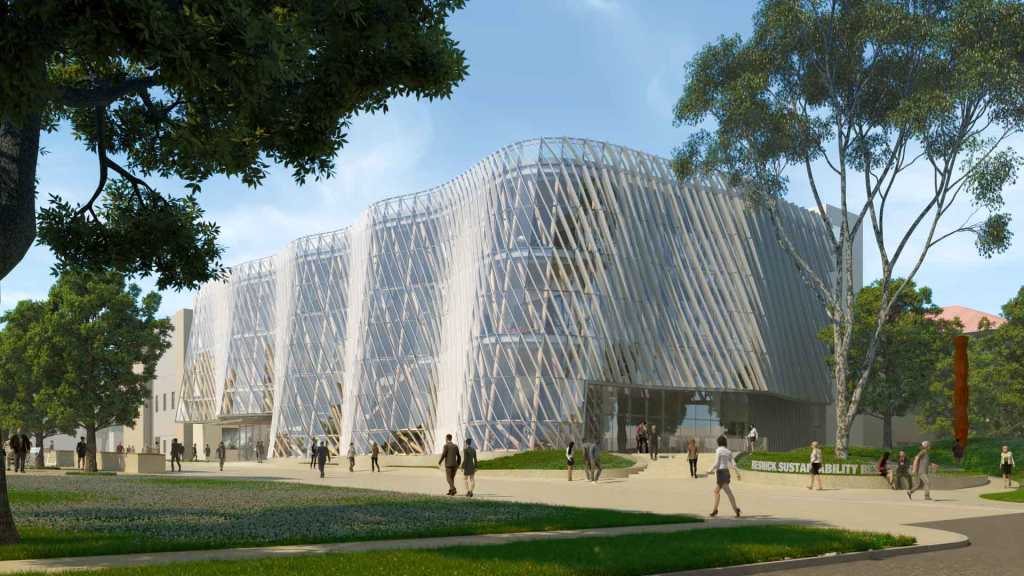
- Resnick Sustainability Institute: A leader in renewable energy research with advanced labs.
- Smart Classrooms: Equipped with AI-driven tools for interactive learning.
- Bechtel Residence: A modern, LEED-certified residence hall with collaborative spaces.
- Sustainability: Caltech’s energy-efficient buildings and water conservation systems align with California’s environmental goals.
- Student Vibe: Intense and collaborative, with students engaging in research and tech-focused clubs like the Caltech Robotics Team.
- Cost of Living: Rent averages $1,300 for a one-bedroom; tuition with room and board is ~$83,000, reflecting its elite status.
4. University of Wisconsin-Madison – Madison, WI
- Why It’s Modern: UW-Madison’s 936-acre campus combines historic charm with modern facilities like the Union South student center, a 277,000-square-foot hub with an art gallery, bowling alley, and movie theater. Its focus on technology and sustainability makes it a standout.
- Highlights:
- Union South: A student-led, tech-equipped center with dynamic spaces for collaboration.
- Wisconsin Institute for Discovery: A modern research facility for interdisciplinary science.
- Smart Housing: Residence halls like Witte and Sellery feature high-tech amenities and energy-efficient designs.
- Sustainability: UW-Madison’s green initiatives include solar panels and a commitment to carbon neutrality by 2040.
- Student Vibe: Vibrant and balanced, with students enjoying tech-enhanced learning and Big Ten sports culture.
- Cost of Living: Rent averages $1,000 for a one-bedroom; in-state tuition with room and board is ~$28,000, competitive for a top public university.
5. Carnegie Mellon University (CMU) – Pittsburgh, PA
- Why It’s Modern: CMU’s 157-acre campus is a tech powerhouse, with facilities like the Gates Center for Computer Science and the world’s first academic cloud lab. Its focus on AI, robotics, and cybersecurity aligns with industry demands.
- Highlights:
- Moonshot Mission Control: A command center for student-designed space projects, like the Iris nano rover.
- Tepper Quad: A modern business school hub with collaborative spaces and smart technology.
- Purnell Center for the Arts: A tech-infused facility for digital media and performance.
- Sustainability: CMU’s LEED-certified buildings and energy-efficient systems reduce environmental impact.
- Student Vibe: Innovative and interdisciplinary, with students active in hackathons and tech startups.
- Cost of Living: Rent averages $1,100 for a one-bedroom; tuition with room and board is ~$80,000.
6. University of California, San Diego (UCSD) – La Jolla, CA
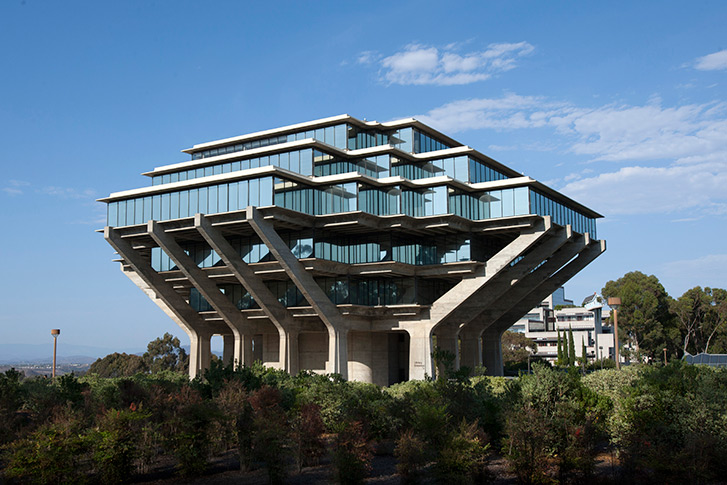
- Why It’s Modern: UCSD’s 1,200-acre campus, recipient of the 2012 Innovator’s Award for Technology, features modern facilities like the Jacobs School of Engineering and the Geisel Library, a futuristic architectural marvel.
- Highlights:
- Price Center: A high-tech student hub with dining, study spaces, and a movie theater.
- Supercomputer Center: One of the most advanced computing facilities for research.
- Sixth College: A modern residential college with tech-enhanced learning spaces.
- Sustainability: UCSD’s solar arrays and water reclamation systems support its carbon-neutral goal by 2025.
- Student Vibe: Diverse and research-driven, with students enjoying coastal views and tech-focused clubs.
- Cost of Living: Rent averages $1,400 for a one-bedroom; in-state tuition with room and board is ~$35,000.
7. Stanford University – Palo Alto, CA
- Why It’s Modern: Stanford’s 8,180-acre campus, ranked #4 in National Universities, blends Spanish Mission-style architecture with modern facilities like the Science and Engineering Quad and the Knight Management Center. Its proximity to Silicon Valley fuels innovation.
- Highlights:
- Huang Engineering Center: A state-of-the-art facility for interdisciplinary engineering.
- Lathrop Learning Hub: A tech-equipped library with collaborative spaces.
- Stanford Research Computing Center: Supports AI and big data research.
- Sustainability: Stanford’s Energy System Innovations program uses 100% renewable energy for campus operations.
- Student Vibe: Entrepreneurial and collaborative, with students launching startups and engaging in tech events.
- Cost of Living: Rent averages $1,600 for a one-bedroom; tuition with room and board is ~$85,000.
8. Georgia Institute of Technology (Georgia Tech) – Atlanta, GA
- Why It’s Modern: Georgia Tech’s 400-acre campus is a leader in STEM, with modern facilities like the Clough Undergraduate Learning Commons and the Technology Square Innovation District, fostering industry partnerships.
- Highlights:
- Coda Building: A high-tech hub for computing and data science in Technology Square.
- Klaus Advanced Computing Building: Supports AI and cybersecurity research.
- EcoCommons: A sustainable green space with stormwater management systems.
- Sustainability: Georgia Tech’s LEED-certified buildings and electric shuttle system promote eco-friendly practices.
- Student Vibe: Collaborative and career-focused, with students active in co-op programs and tech competitions.
- Cost of Living: Rent averages $1,200 for a one-bedroom; in-state tuition with room and board is ~$27,000.
9. University of Southern California (USC) – Los Angeles, CA
- Why It’s Modern: USC’s 229-acre University Park campus combines historic redbrick architecture with modern facilities like the Iovine and Young Academy, a hub for tech-driven creativity. Its ranking as #23 for Best College Campuses (Niche, 2025) reflects its resources.
- Highlights:
- Michelson Center for Convergent Bioscience: A cutting-edge research facility for health tech.
- Annenberg Media Center: A high-tech hub for journalism and digital media.
- Village at USC: A modern residential and retail complex with smart apartments.
- Sustainability: USC’s green roofs and solar panels support its 2030 sustainability goals.
- Student Vibe: Vibrant and diverse, with students enjoying LA’s cultural scene and networking opportunities.
- Cost of Living: Rent averages $1,500 for a one-bedroom; tuition with room and board is ~$85,000.
10. Colorado School of Mines – Golden, CO
- Why It’s Modern: This 373-acre campus, tied for #20 in Most Innovative Schools (U.S. News, 2025), specializes in engineering and applied sciences, with facilities like the Mines Interactive Robotics Research (MIRROR) Lab integrating AI and robotics.
- Highlights:
- MIRROR Lab: Explores human-robot interaction and augmented reality.
- Marquez Hall: A modern facility for petroleum engineering with advanced labs.
- Starzer Welcome Center: A tech-equipped hub for student engagement.
- Sustainability: The campus uses geothermal energy and LEED-certified buildings.
- Student Vibe: Focused and hands-on, with students engaged in research and outdoor activities in the Rockies.
- Cost of Living: Rent averages $1,100 for a one-bedroom; in-state tuition with room and board is ~$34,000.
Why Modern Campuses Matter
Modern college campuses offer significant benefits:
- Enhanced Learning: Smart classrooms and labs, like those at MIT and Caltech, provide hands-on, tech-driven education.
- Career Preparation: Facilities like CMU’s Moonshot Mission Control and Georgia Tech’s Coda Building connect students with industry.
- Sustainability: Eco-friendly designs, as seen at ASU and UCSD, align with students’ environmental values.
- Wellness and Community: Student-centric spaces, such as UW-Madison’s Union South and USC’s Village, foster collaboration and well-being.
However, modern campuses often come with higher costs, especially in urban areas like Cambridge or Los Angeles. Students should weigh these against financial aid and long-term career benefits.
Considerations for Students
- Visit Virtually or In-Person: Explore campuses via 360-degree tours (e.g., College Transitions’ links) or on-site visits to assess tech facilities and vibe.
- Evaluate Costs: Compare tuition and living expenses, particularly for private institutions like MIT and Stanford.
- Check Program Fit: Ensure the campus’s tech focus aligns with academic goals (e.g., STEM at Caltech, entrepreneurship at Stanford).
- Engage with Students: Use Niche reviews or X to gauge campus culture and facility use.
- Assess Accessibility: Consider urban vs. suburban settings (e.g., USC’s LA access vs. Mines’ Golden tranquility).
The 10 most modern college campuses—MIT, ASU, Caltech, UW-Madison, CMU, UCSD, Stanford, Georgia Tech, USC, and Colorado School of Mines—represent the forefront of higher education’s evolution. These institutions integrate technology, sustainability, and student-centric design to create environments that inspire innovation and prepare students for future challenges. Whether your student is drawn to MIT’s high-tech labs, ASU’s eco-conscious initiatives, or USC’s creative tech hubs, these campuses offer transformative experiences. At South Shore College Consulting & Tutoring, we’re here to guide you through the college selection process, ensuring your student finds a campus that matches their academic aspirations and personal values. Contact us today to start exploring these modern academic hubs and find the perfect fit.
Discover more from South Shore College Consulting & Tutoring
Subscribe to get the latest posts sent to your email.
